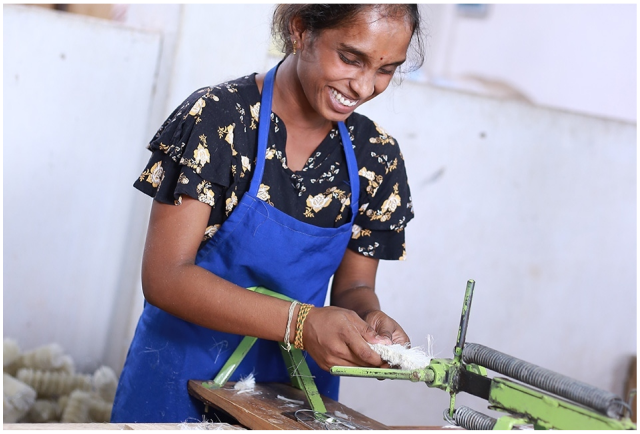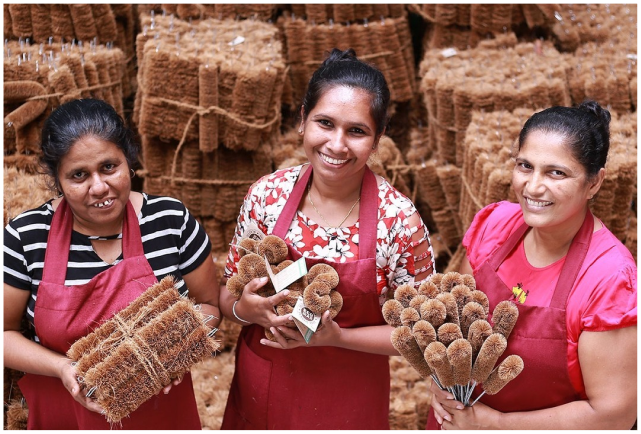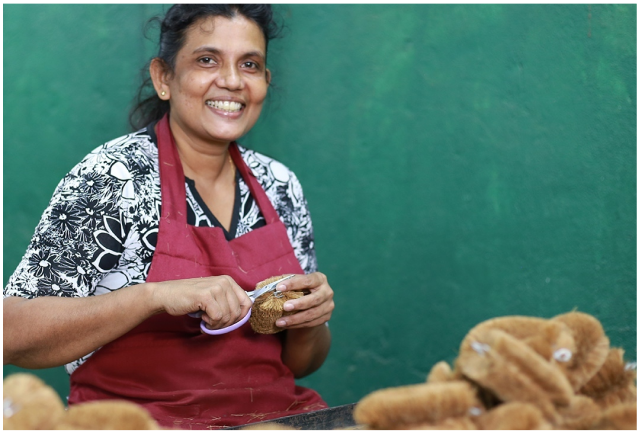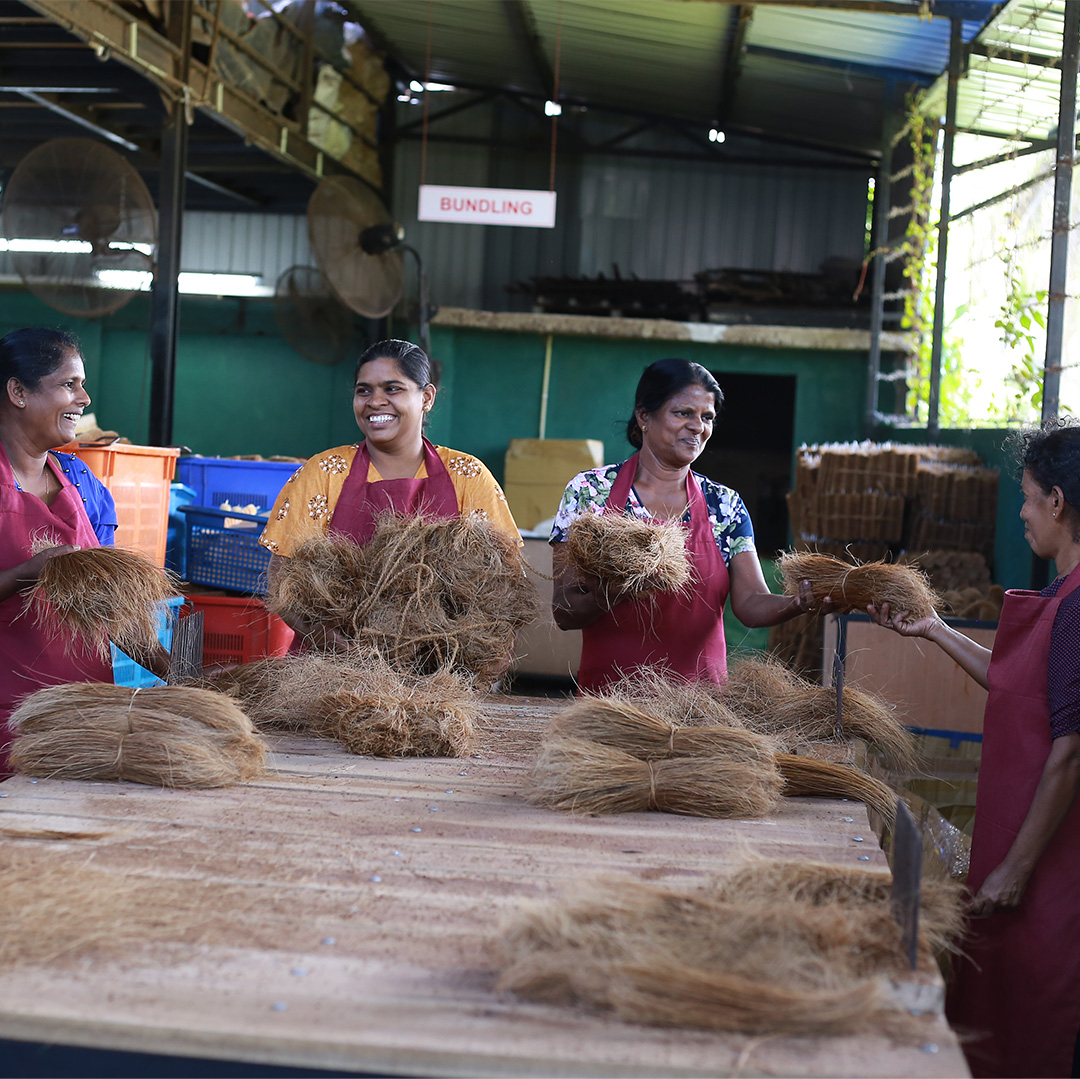
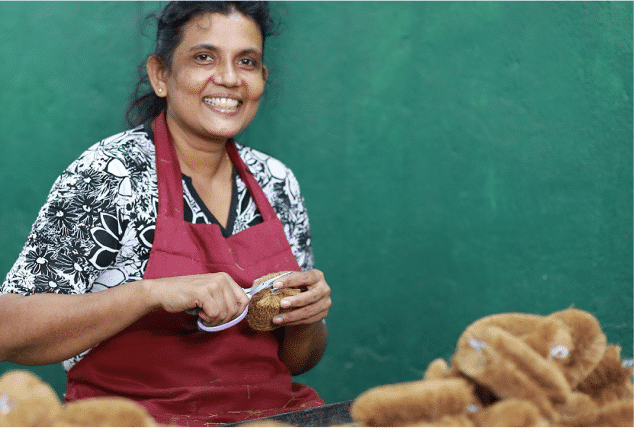

Our handcrafted ECOMAX brushes are at the core of our business. Working with our artisans in Sri Lanka we provide sustainable employment for women, following Fair Trade principles while creating plastic free alternatives for everyday products.
Gradually we have introduced a range of products that complement our brushes. But with all our products our approach to sustainability balances people, planet and progress.
Together we are investing in women and their communities.
ECOMAX Brushes | SRI LANKA
Starting as a small enterprise to create employment opportunities for women in an overcrowded and underprivileged housing area on the outskirts of Colombo, ECOMAX Brushes has now grown to encompass three sites across Sri Lanka.
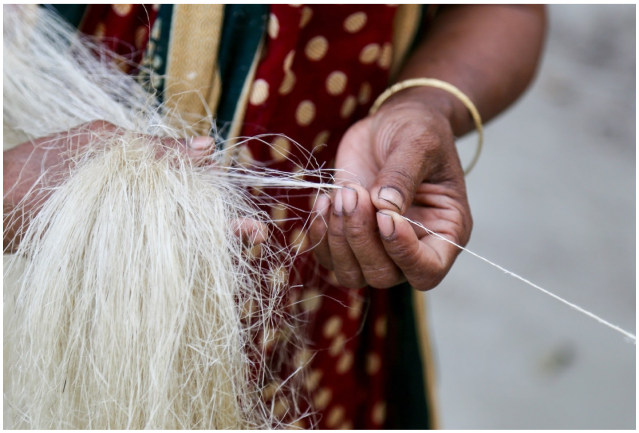
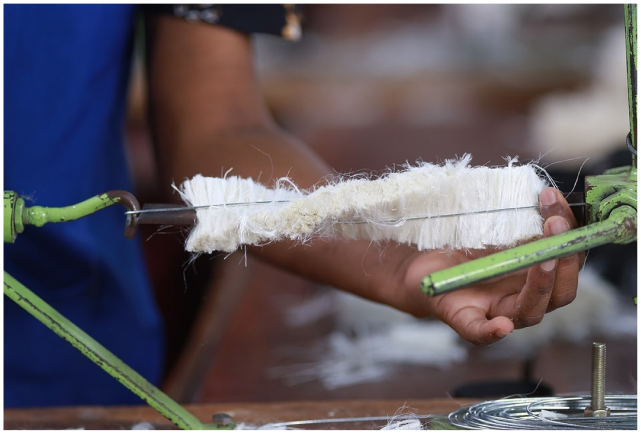
By training women to hand-twist natural fibres using simple, locally made machines, a sustainable industry has grown that now provides employment for more than 200 people, 95% of whom are women.
Our ECOMAX planet-loving brushes do more than clean our homes and bodies. They create opportunities for women and support communities across Sri Lanka.
Nadeeka joined our brush-making team in 2018, learning the skill of hand-twisting the natural fibres used to make our brushes.
Living just one kilometre from the factory, she can walk to work while still being close to home and her two children. Education is particularly important to Nadeeka. Having missed out on opportunities herself, she wants her children to have every chance to learn and build their own futures.
“Working here has made me strong and over the years the rewards and benefits I have received through the company is immense.”
For Nadeeka, having secure work close to home means she can contribute to her family’s future while balancing work and family life.
Paper Pottery | SRI LANKA
We’ve worked with our Paper Pottery makers since 2018. Their waterproof pots and toilet brush holders are made from recycled paper, with natural rubber used to waterproof the finished pieces.
The production process is designed to create no paper waste, while a Home Work Project provides regular work for women in rural communities who need to balance earning an income with caring for their children.
The Home Work Project gives rural mothers the opportunity to earn a regular income while working from home and caring for their children. With 128 women now involved and the project continuing to grow, it has created a way for women in remote communities to access regular work without having to leave their families behind.
Loofahs | EGYPT
Our loofahs are sourced from small family farms in Egypt, where traditional farming methods have been passed down through generations.
The loofahs are carefully processed by hand, with every part of the plant used and by-products turned into compost for future crops. Our producers also provide fair wages and stable, flexible work for local people, particularly women and mothers, helping them earn an income while balancing work and family life.
From the farm to the finished product, our loofahs are a simple example of natural materials, traditional skills and thoughtful production working together.
Hemp & Cotton | BANGLADESH
Our hemp and cotton products are made by women through the Hajiganj Handicrafts Crochet Unit, established by Prokritee in 2005 to create work for families in rural Bangladesh.
Crochet is a traditional skill, passed down from mothers and grandmothers. What began with 22 women has grown to 35 regular and 52 seasonal producers, with support from Prokritee’s design and training teams helping the group develop new products and reach export markets.
For many of the women, earning an income has made a real difference to their families. Their work helps their children stay in school and gives them the opportunity to save, plan for the future and build more secure lives for their families.
Metalware | INDIA
Our metalware is made in small workshops in Uttar Pradesh, where traditional metalworking skills are combined with simple machinery and hand-finishing. Different specialist workshops contribute different parts of the process, allowing artisans to earn from the skills they have developed over generations.
Hemp & Cotton | INDIA
Keeping traditional skills alive
In the small town of Narsapur, crochet has been passed from mother to daughter for generations.
Today, women work together in a cooperative, crocheting from home while caring for their families. More experienced artisans teach younger women, helping to keep the craft alive while creating opportunities for women to earn their own income.
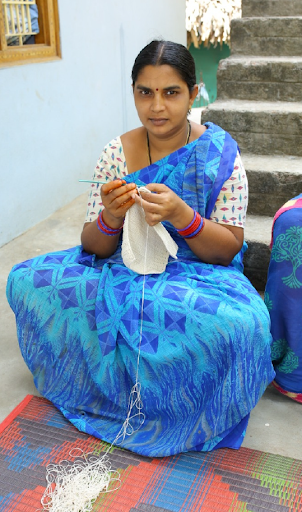
Thota
Thota is one of the co-ordinators of the co-operative.
“I feel great pride in helping myself and greater satisfaction in helping surrounding women to make an earning to support their family”
Hair Brushes | CHINA
We began working with our producers in China in 2021. When we were unable to find Fair Trade producers with the specialist machinery needed to manufacture our hair brushes, we widened our search and discovered the factory we work with today.
The factory has a team of energetic and passionate people and specialises in the manufacture of timber brushes. They hold ISO 9001 certification and their timber is Forest Stewardship Council (FSC) certified. They are committed to responsible manufacturing, environmental protection and social responsibility, and we are proud to have built a strong working relationship with them.
Sinamay Bags | PHILIPINES
Starting as a small family-run trading house in 1966, the company shifted its focus in 1994 towards empowering Filipino craftspeople and promoting Philippine craftsmanship. They work with traditional handicrafts, reimagining them in new, sustainable and innovative ways while helping to preserve traditional skills and techniques.
Through exporting these crafts, they have created opportunities for artisans in rural areas of the Philippines, including the makers of our sinamay bags. Their work helps bring traditional Philippine craftsmanship to a wider market while providing valuable employment for local artisans.
Wool Balls | NEPAL
Our latest partnership is with our felted wool producers in Nepal. A pioneer in introducing traditional Nepalese felt and woollen crafts to the international market, they combine traditional techniques with contemporary designs to create high-quality products with worldwide appeal.
For more than 25 years, they have created sustainable employment opportunities for people experiencing economic and social disadvantage in Nepal. As a World Fair Trade Organisation (WFTO) producer, they are committed to high standards of Fair Trade throughout their operations, with a transparent supply chain independently audited by international social compliance organisations.
Each piece is individually handmade from 100% natural wool, making every one unique. The craftswomen are highly skilled in both design and traditional felting techniques, and their work provides more than an income. By creating opportunities for women to earn a sustainable living, they help strengthen the role of women within their families and communities.
When women are empowered, the benefits extend beyond the individual. Greater financial independence can contribute to better opportunities for their children and families, including education, nutrition and health, creating positive change throughout the wider community.
Their mission is to build the social and economic capacity of disadvantaged women in Nepal by creating productive employment opportunities and sustainable connections to international markets.
When you choose an ECOMAX product, you’re choosing something made by someone’s hands.
You’re supporting skills that have been passed down through generations, creating opportunities for women to earn an income and helping small communities build a more secure future.
We know our products because we know the people who make them.
That’s what it means to know your maker.